
Hampshire County Wanted Sources
The Hampshire County Sheriff's Office has no most-wanted page, no photo gallery, and no recurring warrant feature. There is no local reward program either. Skip any third-party name index or stray social post that claims to fill the gap; none of them is a complete county list. The HSO site covers jail operations, visitation, civil process, and contact details for all twenty county communities, but warrant verification happens inside controlled systems the public cannot reach.
Two state sources do the heavy lifting. The Massachusetts State Police Most Wanted page posts fugitive photographs with reporting numbers and a clear warning against trying an apprehension yourself. Entries shift over time, so rely on the live page rather than any saved count. For parole matters only, the Massachusetts Parole Board wanted-parolee page handles those warrants. Neither source covers every active Hampshire County warrant.
Hampshire Wanted Poster Fields
A poster is an agency notice, not a case file. The publishing office controls it. That office can mark an entry captured, swap the photo, or change the instructions at any moment. The picture may be years old, too. Faces and names repeat across a county, so casual identification is a bad idea. That is exactly why tips go to trained personnel rather than to comment threads.
| Field | What it means |
|---|---|
| Publishing agency | The office responsible for the notice and correct tip destination. |
| Name and photograph | Recognition aids, not proof of identity or guilt by themselves. |
| Wanted basis | The stated warrant, parole matter, or alleged offense. |
| Description | Physical details that help officials assess a sighting. |
| Status or date | A clue to currency; check the live page for changes. |
| Instructions | The official reporting route to use without approaching anyone. |
Do not confuse a wanted poster with a booking photo. The poster exists to help locate a person. A booking photo, by contrast, gets taken during intake once someone is already in custody.
Use Hampshire Wanted Notices Safely
Let the source lead the process. Reposting a poster as a homemade alert is risky. So is following someone or closing distance for a better look. The agency can match your tip against nonpublic identifiers and current case facts that no public page will ever show.
- Open the live State Police or Parole Board page and confirm that the notice remains posted.
- Check the agency, date, photo, description, alleged basis, and instructions together.
- Note only what you saw, including place, time, travel direction, and any urgent risk.
- Move away and call the number on the notice. Use 911 for an emergency.
- Let officials verify identity and status. Do not confront, detain, threaten, or shame the person.
Booking is a separate stage if custody follows. The Hampshire County booking and mugshot lookup sorts out the differences among city arrest logs, HSO records, court dockets, and state-prison results.
Hampshire Wanted Tip Contacts
State Police provides the one confirmed statewide reporting route. South Hadley runs an anonymous general tip line. That line is neither a county warrant database nor a reward promise. No fixed reward program or HSO fugitive-tip line exists in the available public sources.
Massachusetts State Police Fugitive Unit
Primary: (800) 527-8873
Second official line: (508) 820-2121
Use: A live State Police wanted notice
South Hadley Police Tip Line
Phone: (413) 538-8231, extension 3
Use: General local tips, not warrant confirmation
Emergency: 911
Note: Anonymity and reward terms vary by channel, so ask the office about current terms without delaying an urgent report.
Check Hampshire County Warrants
No public HSO warrant portal exists. MassCourts can sometimes surface a case number, a process entry, a hearing, or a later event where remote access is permitted, but it is not a live clearance tool. Most remote criminal searches want a docket number first. A name search that returns nothing proves nothing about warrants.
Northampton Police policy treats WMS, CJIS, and NCIC checks as controlled law-enforcement work. Officers and certified operators perform those checks and verify the results. Those systems sit far outside the city's public arrest PDFs. HSO Civil Process serves court-issued papers, but its public page is not a criminal-warrant name search either.
- Identify the likely issuing court and docket number, if known.
- Review the court-docket instructions and eligible MassCourts entries.
- Ask the owning clerk what public facts can be confirmed and how counsel may address the matter.
- Use an attorney or authorized law enforcement for a definitive current check.
- Follow court or counsel directions for a safe appearance or resolution. Never use records to evade service or arrest.
Criminal Procedure Rule 6 lays out how summonses and warrants issue and how a warrant gets examined within a reasonable time. It creates no online all-county search, though.
Hampshire Warrant Types Differ
"Warrant" is a broad word in Massachusetts. It actually covers several distinct processes. Mix them up and you chase the wrong office. The issuing court or agency can explain a specific record. A public website cannot infer one from a name alone.
| Record | Path and limit |
|---|---|
| Arrest warrant | Confirm through the issuing court, counsel, or authorized police. |
| Docket process entry | May be public but can lag and is not live clearance. |
| Parole warrant | Uses the Parole Board’s separate reporting channel. |
| Civil process | HSO may serve papers; its division is not a criminal database. |
| Wanted poster | A selected notice, not every Hampshire County warrant. |
An active warrant is not a new arrest. Arrest, booking, arraignment, and disposition are separate events on a timeline. Later court papers may show a matter reduced, dismissed, resolved by plea, tried, or otherwise concluded.
Why Hampshire Checks Stay Controlled
Hampshire County's real problem is the gap between public pages and police systems. HSO posts no list. Northampton's policy pushes warrant data through WMS, CJIS, and NCIC with mandatory verification, safeguards that protect against stale returns, sealed matters, and lookalike names. No city log or empty docket search works as a "no warrant" certificate.
Court geography complicates things further. Amherst and South Hadley cases generally begin in Eastern Hampshire District Court when it holds jurisdiction. Northampton and the western communities use Northampton District Court. Superior Court takes qualifying cases from across the county. An arrest city and docket number help route an inquiry, but they never replace a current clerk record.
Note: Contact an attorney before an unexpected station visit when a warrant may affect you.
Hampshire Wanted Social Updates
HSO maintains official Facebook and YouTube accounts. Both are linked through the Massachusetts Sheriffs' Association. They work well for announcements and public-safety messages. No set schedule governs wanted posters, booking photos, warrant roundups, or roster updates, so a quiet feed tells you nothing about warrant status.
There is no official HSO mobile app for wanted notices, jail lookup, or booking photos. Generic apps and sponsored lookup products carry no sheriff authorization unless an official link backs them up. For public posters, use the State Police page. For a specific warrant, use the issuing court or a verified police system.
Resolve Hampshire Warrants Lawfully
Think a Hampshire warrant has your name on it? Start with the paperwork. Gather any docket number or court notice you have, then talk to a lawyer or the clerk who issued it. Counsel can confirm which division is involved, explain what process applies, and map out an appearance or surrender that stays lawful. Clerks handle procedure; they cannot give legal advice.
Friends can help too, within limits. Concealing someone or booking travel to dodge service only makes things worse. What helps is sharing official court contacts, passing along a docket number, and reporting genuine safety concerns. Keep it accurate and let the process work.
Verify Hampshire Warrant Ownership
Being in custody does not settle the warrant question. Someone can be arrested on one matter while a separate court process still waits. Or a person gets released before a docket catches up. The Sheriff's Office handles county custody and the booking records it may release. The issuing court owns its own warrant process. State Police runs its wanted posters, and the Parole Board controls parole notices. Sorting those owners apart keeps an old photo or stale news item from standing in for current legal status. The official State Police wanted source shows why each poster has to stay tied to its publisher.
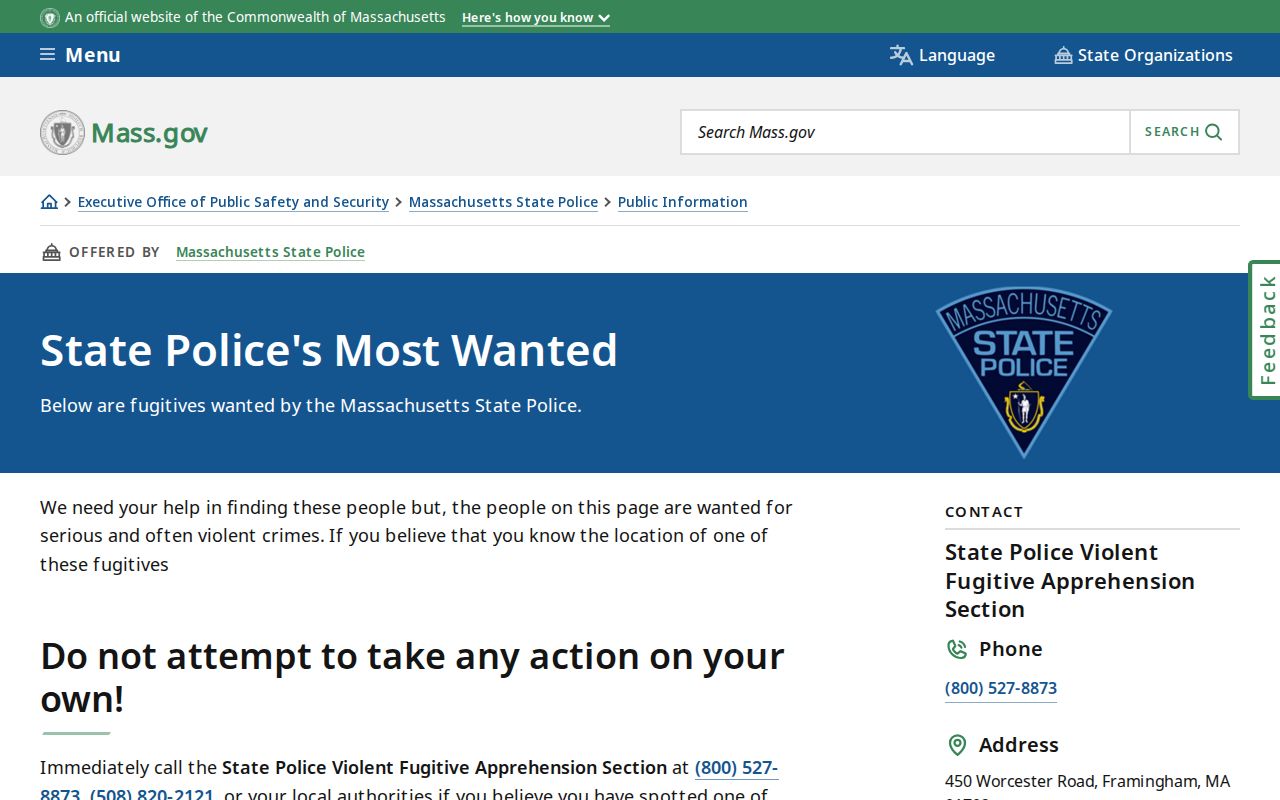
The archived interface links straight to the live state source. No fugitive photograph is copied or rehosted here.
Public Record Search
Sponsored Results